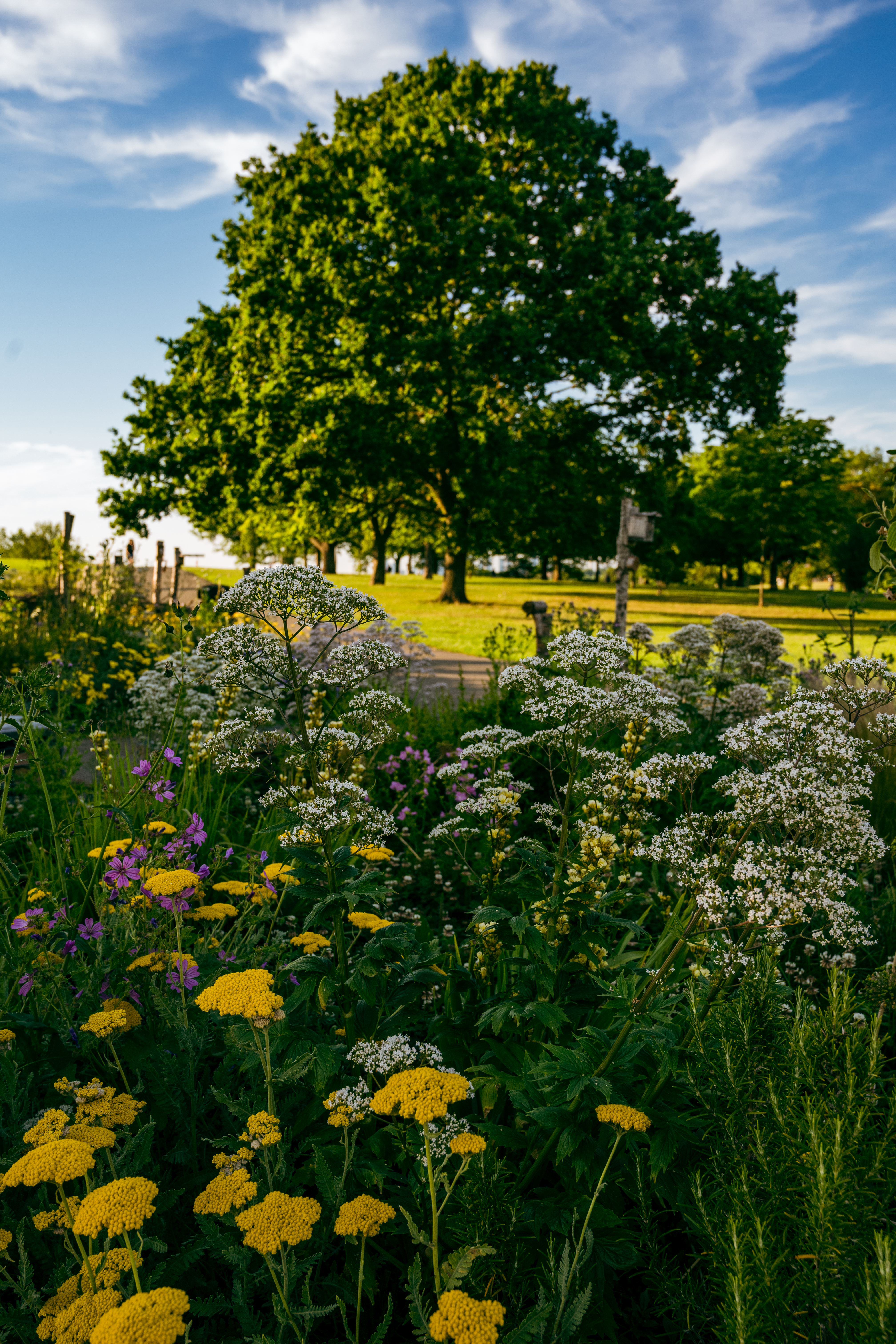
Hilly Fields
Hilly Fields is a spacious hilltop park between Brockley and Ladywell, known for broad London views, open grass, mature trees, sports facilities, a children’s play area and a small nature reserve. It is a practical local park for walking, play, exercise, picnics and community events.
About Hilly Fields
Worth knowing
Why visit?
Go for the elevated views, generous open space and unusually varied mix of facilities. Hilly Fields works equally well for a short walk, a family playground visit, a picnic, a run or an organised game of tennis, cricket or basketball. The stone circle and wilder habitats add interest beyond the main lawns, while the park café makes it easier to turn a quick visit into a relaxed stop. It is especially useful for visitors exploring Brockley or Ladywell who want a substantial green space without travelling to central London.
History & character
Hilly Fields was once open land known as Vicar’s Hill, with rough grazing, former brickmaking activity and an area used for game shooting. In the late nineteenth century, the land was threatened by development. A campaign involving local residents, the Kyrle Society, the Metropolitan Public Gardens Association and the Commons Preservation Society helped secure it as public open space, with Octavia Hill playing an important role in the campaign. The London County Council acquired and laid out the land, and Hilly Fields opened as a public park on 16 May 1896. The original Victorian layout included perimeter railings, a refreshment house, shelters, a drinking fountain and a bandstand, although most of these structures have disappeared. The park was laid out under the direction of Lieutenant Colonel J. J. Sexby, the London County Council’s chief parks officer. A nature reserve was established in 1992, and a stone circle and sundial were added near the summit for the millennium in 2000. The park remains an important part of the Brockley and Ladywell landscape and is associated with the surrounding Brockley Conservation Area.
Gallery
Images are shown with source/photographer credit where supplied.

Useful visitor tips
Frequently asked questions
Is Hilly Fields free to visit?
Yes. Hilly Fields is a public park with unrestricted general access and no admission charge. Some activities, sports bookings or organised events may have their own arrangements, but walking, sitting, playing informally and enjoying the views are free.
What is there to do at Hilly Fields?
Visitors can walk, picnic, enjoy the views, use the children’s play area, visit the stone circle, watch or take part in sports, and explore the park’s wilder habitats. Facilities include tennis courts, cricket and football space, basketball, table tennis, a bowling green and a park café.
Are dogs allowed at Hilly Fields?
Dogs are commonly allowed in the park, but some dog-free zones apply. Keep dogs under control and away from the play area, sports facilities and wildlife-sensitive sections. Check signs at entrances and around the park for any local restrictions.
Is Hilly Fields suitable for families?
Yes. The park has a children’s play area, large open lawns and a café, making it suitable for a family visit. The site is hilly, so families with buggies may find the main paths more manageable than rougher routes around the edges.
Are there toilets at Hilly Fields?
Toilets are listed in regional open-space information, but current opening times and accessibility arrangements are not clearly confirmed. It is sensible to check on arrival or ask at the café rather than rely on published toilet hours.
How do I get to Hilly Fields by public transport?
Brockley station is the most useful nearby Overground and rail station, while Ladywell station is another option. Bus information associated with the park includes routes 484, 122, 273, 584 and P4. Check the TfL journey planner before travelling for current stops and service changes.
How long should I allow for a visit?
Allow around 45 minutes for a walk and the main views, or one to two hours if you are visiting the playground, using sports facilities, stopping at the café or exploring the quieter nature areas. Local events and organised runs can extend the visit or make the park busier.