
Prime Meridian
Stand on the historic Prime Meridian at the Royal Observatory in Greenwich Park, with one foot in each hemisphere. The ticketed visit also includes historic observatory buildings, scientific instruments, an audio guide and broad London views from the top of the hill.
About Prime Meridian
Worth knowing
Why visit?
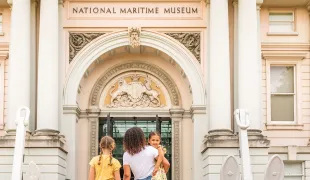
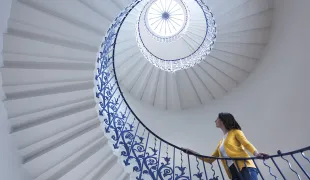
Visit for the simple novelty of standing across longitude zero, but stay for the much richer story behind it. The Observatory combines an internationally important scientific landmark with historic buildings, early timekeeping technology, telescopes and one of Greenwich’s best viewpoints. It works well as part of a wider day in the Maritime Greenwich World Heritage Site, especially alongside Greenwich Park, the National Maritime Museum, Queen’s House or Cutty Sark. Families can connect the line to practical ideas about maps, time zones and space, while history and architecture enthusiasts have several centuries of material to explore beyond the courtyard.
History & character
The Royal Observatory was founded in 1675 by Charles II, with John Flamsteed appointed as the first Astronomer Royal. The purpose was closely tied to navigation: better astronomical observations and accurate timekeeping could help solve the long-standing problem of finding longitude at sea. Flamsteed House, designed by Christopher Wren, formed the original observatory and remains the oldest part of the site. Greenwich’s meridian became the world’s agreed Prime Meridian at the International Meridian Conference in Washington, D.C., in 1884. Greenwich was selected because its astronomical observations and navigational data were already widely used by seafarers and mapmakers. The Observatory subsequently became closely associated with Greenwich Mean Time and the development of global timekeeping. Its position within Greenwich Park also reflects the area’s royal and scientific history: the park is a historic landscape surrounding one of England’s earliest purpose-built scientific buildings.
Gallery
Images are shown with source/photographer credit where supplied.



Visitor themes
What visitors commonly mention
Visitors commonly praise the chance to stand on the line, the historic atmosphere, the telescopes and timepieces, and the wide views over London and the Thames. Families and first-time visitors often find the site interesting beyond the Meridian itself, particularly when they allow time for the museum displays or audio guide. A recurring practical theme is the steep walk up through Greenwich Park. Some visitors are surprised that the marked line inside the Observatory is ticketed, although others mention that the wider park and views can still be enjoyed without entering the attraction.
This section summarises recurring visitor themes; it is not an endorsement by Welcome to Blackheath & Greenwich.
Useful visitor tips
Frequently asked questions
Do I need a ticket to stand on the Prime Meridian?
Yes. The marked Prime Meridian line inside the Royal Observatory is included with admission to the Observatory, rather than being a separate free attraction. The official site recommends booking online in advance to guarantee entry. Members receive free entry, subject to the current membership arrangements.
How much does the Royal Observatory cost?
The published admission price is £24 for adults and £12 for children, with free entry for Royal Museums Greenwich members. The ticket includes the Prime Meridian line, Observatory displays, historic buildings and the audio guide. Prices and special offers can change, so check the official booking page before travelling.
Can I see the Prime Meridian without paying?
You can enjoy Greenwich Park, its viewpoints and the surrounding area without entering the Royal Observatory, but the historic metal line in the Meridian Courtyard is inside the ticketed attraction. If standing on the marked line is your main reason for visiting, you need an Observatory ticket.
Are dogs allowed at the Prime Meridian?
Dogs are welcome in much of Greenwich Park under control, but they are not allowed in the Royal Observatory Garden and several other restricted park areas. The indoor Observatory’s dog arrangements are not clearly stated on the published visitor information, so contact Royal Museums Greenwich in advance if you are bringing a dog. Assistance dogs should be discussed directly with the venue.
Is the Royal Observatory suitable for children?
Yes. The Prime Meridian, time zones, telescopes and space displays provide accessible starting points for family visits, and the Royal Observatory promotes family activities. Greenwich Park also has an inclusive playground for children up to 12, with sand and water play, refreshments, children’s toilets and an accessible toilet.
How do I get to the Observatory without walking up the steep hill?
Buses 53, 54, 202 and 380 stop near the top of Greenwich Park and avoid the main hill climb. By rail, Blackheath Station offers a longer route that avoids the steepest climb. The park car park along Blackheath Avenue is also close to the Observatory and provides a route that avoids the steep hill walk.
Is the Royal Observatory wheelchair accessible?
Parts of the Observatory are accessible, including the Meridian line, Meridian building ground floor, Astronomer’s Garden and Camera Obscura. The Astronomy Centre galleries are accessible by lift, and accessible toilets are available. Some older listed buildings and exhibits are not fully accessible. The hill, steps and route through Greenwich Park should be considered when planning.
How long should I allow for a visit?
The Meridian line itself takes only a few minutes, but the Royal Observatory is a substantial historic attraction with telescopes, timekeepers, galleries, buildings, views and an audio guide. Allow enough time to explore beyond the photo opportunity, particularly if combining the visit with Greenwich Park or nearby museums and landmarks.