
A Visitor's Guide to the Royal Observatory: History, Views and Greenwich Park
A practical local guide to Royal Observatory Greenwich, including the Prime Meridian, history, opening times, tickets, accessibility, Greenwich Park and nearby food.
Royal Observatory Greenwich is one of those places where the story of Greenwich becomes much bigger than the neighbourhood itself. Sitting at the top of Greenwich Park, it is the historic home of Greenwich Mean Time and the Prime Meridian — the line from which longitude is measured east and west around the world.

It is also a particularly good place to understand why Greenwich became so important to science, navigation and timekeeping. The Observatory is not simply a photo stop on the Meridian Line: the historic buildings, instruments, galleries and setting tell a much wider story about how astronomers tried to map the skies accurately enough to help sailors navigate at sea.
Royal Observatory Greenwich: the home of time
The Royal Observatory was founded by Charles II in 1675, with John Flamsteed appointed as the first Astronomer Royal. The original Observatory building, now known as Flamsteed House, was designed by Christopher Wren with Robert Hooke and completed the following year.
The Observatory’s early work was closely tied to one of the great practical problems of the age: finding longitude accurately at sea. Astronomers recorded the positions of the Moon and stars, while the development of increasingly precise timekeeping became fundamental to navigation. Over time, Greenwich became internationally associated with the Prime Meridian and Greenwich Mean Time.
Today the site operates as a museum and visitor attraction, but the science is still very much present. You can explore historic timekeeping and astronomy, see instruments connected with the development of navigation, and stand on the famous Meridian Line with one foot in the eastern hemisphere and one in the western.
What can you see inside?
A visit is spread across a number of historic spaces rather than a single conventional museum gallery. Flamsteed House is the original Observatory building and includes displays exploring time, longitude and the people who lived and worked here.
One of the most recognisable features is the red Time Ball on the roof of Flamsteed House. It was installed in the nineteenth century as a public time signal and still drops at 1pm. Before electronic communication made precise time instantly available, visible signals like this had a very practical purpose.
The Observatory is also associated with the Great Equatorial Telescope, one of the site’s major historic instruments. Some parts of the historic complex involve stairs or restricted access because of the nature of the buildings, so visitors with specific access requirements should check the current Royal Museums Greenwich accessibility information before travelling.
The Peter Harrison Planetarium is currently closed as part of the First Light transformation project, so it is worth checking the official Observatory website for the latest information about what is open on the day of your visit.
The Prime Meridian experience
For many visitors, the Prime Meridian is the moment they have come for. Greenwich was chosen as the reference point for the world’s Prime Meridian in the nineteenth century, and the line through the Observatory remains one of the most photographed spots in Greenwich.
There is something pleasingly simple about standing across the line, but the galleries give that photograph some context. The Meridian matters because it is part of a much larger history of mapping, navigation and standardising time. Greenwich’s relationship with the sea, the Observatory’s astronomical work and the development of accurate clocks all come together here.
If you are visiting with children, this is also one of the easiest parts of the site to turn into a conversation about time zones, maps and how people worked out where they were before GPS.
Opening times, tickets and how long to allow
Royal Museums Greenwich lists the Royal Observatory as open daily. Standard opening hours are 10am–5pm, although extended summer hours can apply; in September 2026 the Observatory is operating 10am–6pm with last entry at 5pm. Opening arrangements and last-entry times can change, and occasional early closures take place, so checking the official Royal Museums Greenwich page before travelling is sensible.
The main Observatory attraction is ticketed. At the time of publication, Royal Museums Greenwich lists adult admission at £24 and child admission at £12, with children under four free when registered with a paying adult. Prices, offers and admission arrangements can change, so use the official booking page for the current rate.
For the Observatory itself, allowing roughly an hour and a half to two hours gives you time to explore without rushing. If you also want to walk through Greenwich Park, stop for food, enjoy the viewpoint or continue into central Greenwich, it is easy to turn the visit into half a day or longer.
Greenwich Park is part of the experience
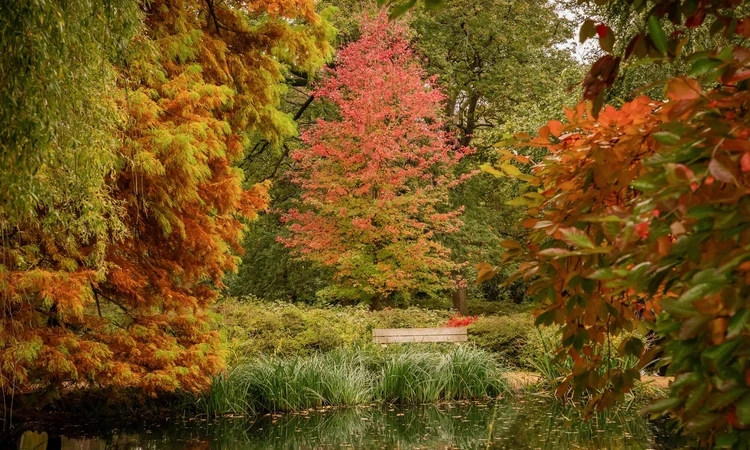
It would be difficult to separate a visit to the Observatory from Greenwich Park. The climb through the park is part of the sense of arrival, and the view from the top of the hill is one of the most recognisable panoramas in this part of London.
Greenwich Park covers 74 hectares and combines broad lawns, historic avenues, formal gardens, quieter green spaces and family facilities. The area around the Observatory looks north over the Queen’s House and National Maritime Museum towards the Thames, Canary Wharf and the wider London skyline.
Unlike the Observatory itself, Greenwich Park is free to enter. The park’s pedestrian gates open from 6am, with closing times varying seasonally. Current park information should always be checked before an early-morning or evening visit because gate times, events and temporary works can affect access.
If you have time, do more than walk directly up and back down the hill. The park contains the Flower Garden, Rose Garden, Herb Garden, Queen’s Orchard, playground, sports areas and quieter walking routes. It is large enough that a visit can feel very different depending on whether you are here for the Observatory, a picnic, a family afternoon or simply a long walk.
Getting to the Observatory
The Observatory’s position at the top of Greenwich Park is spectacular, but the hill is worth planning for.
The direct walking route from the National Maritime Museum takes around 10–15 minutes and includes a steep climb and some steps. Royal Museums Greenwich also provides guidance for a less-steep accessible route through the park, which takes longer. Visitors who want to avoid the main hill can use bus routes serving the top of Greenwich Park.
Cutty Sark DLR, Greenwich and Maze Hill stations are all useful for reaching the wider area. Greenwich Pier is another option if you are arriving by river. If step-free travel is important, check the current transport information and the Observatory’s accessible travel guide before setting off.
Parking is available in Greenwich Park along Blackheath Avenue, around 500 metres from the Observatory. It is metered and managed by The Royal Parks, and availability follows the park’s access arrangements.
Accessibility and planning ahead
Because this is a historic site, accessibility varies between buildings. Royal Museums Greenwich advises that some areas, including the Great Equatorial Telescope and Octagon Room, may not be accessible, while Flamsteed House and the Time and Longitude Gallery have lift access.
The route through Greenwich Park is another consideration. The main approach from central Greenwich is steep, so visitors with reduced mobility may prefer the recommended accessible route or public transport serving the upper part of the park.
The most useful approach is to check both the Observatory’s current accessibility information and any temporary closure notices before travelling. That is especially important if a particular gallery or historic room is the main reason for your visit.
Where to stop for food
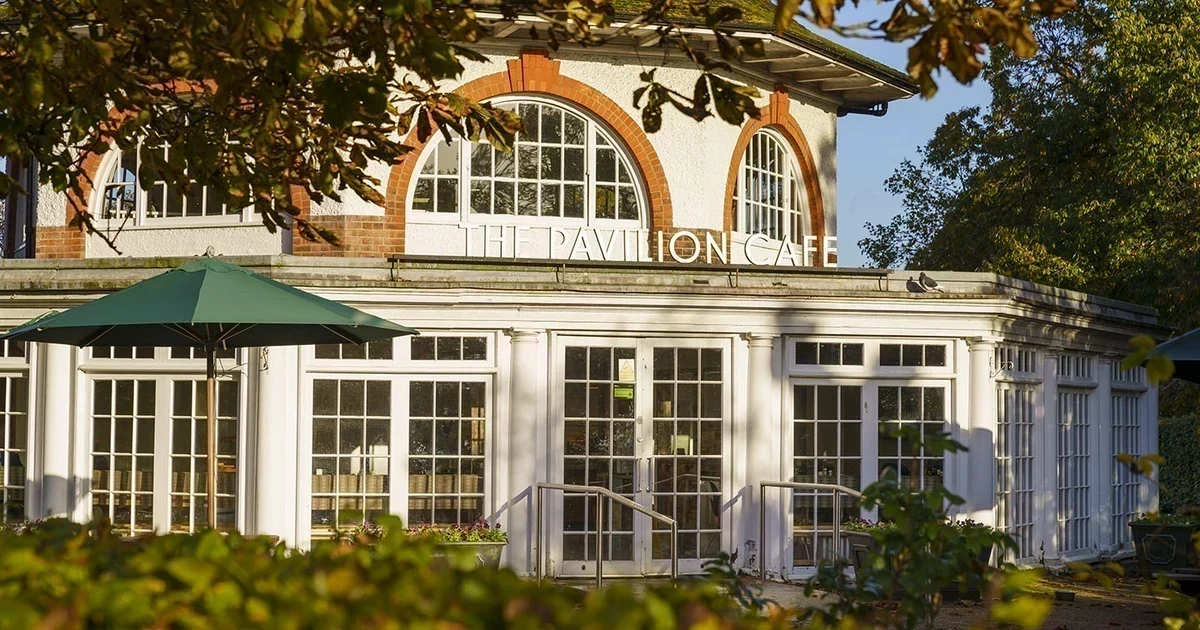
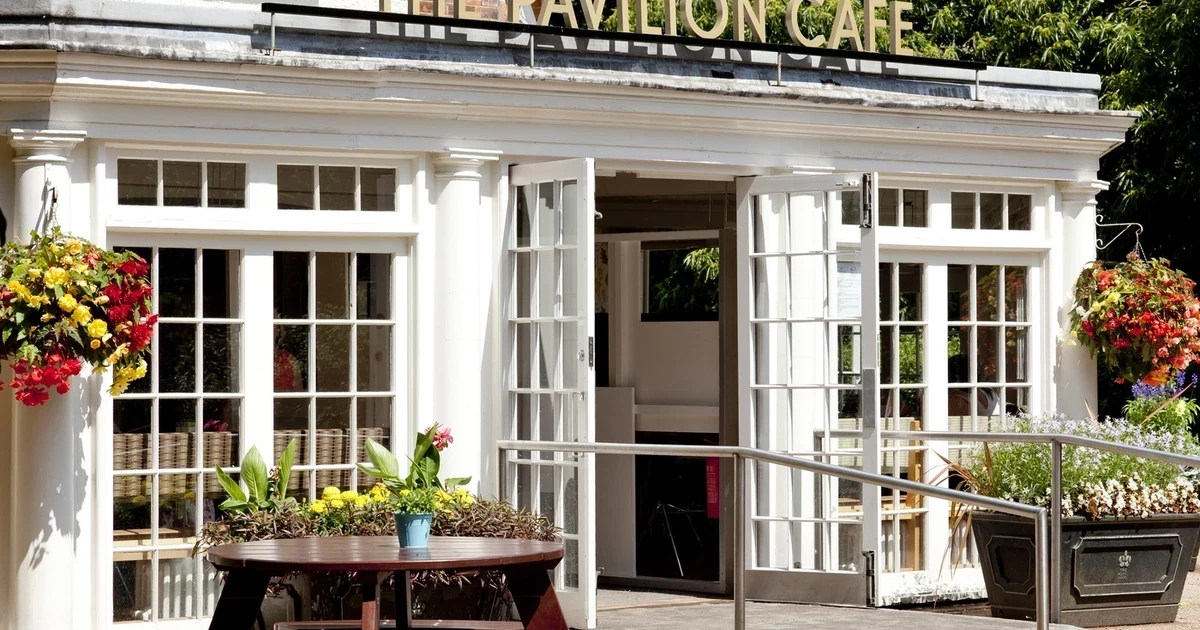
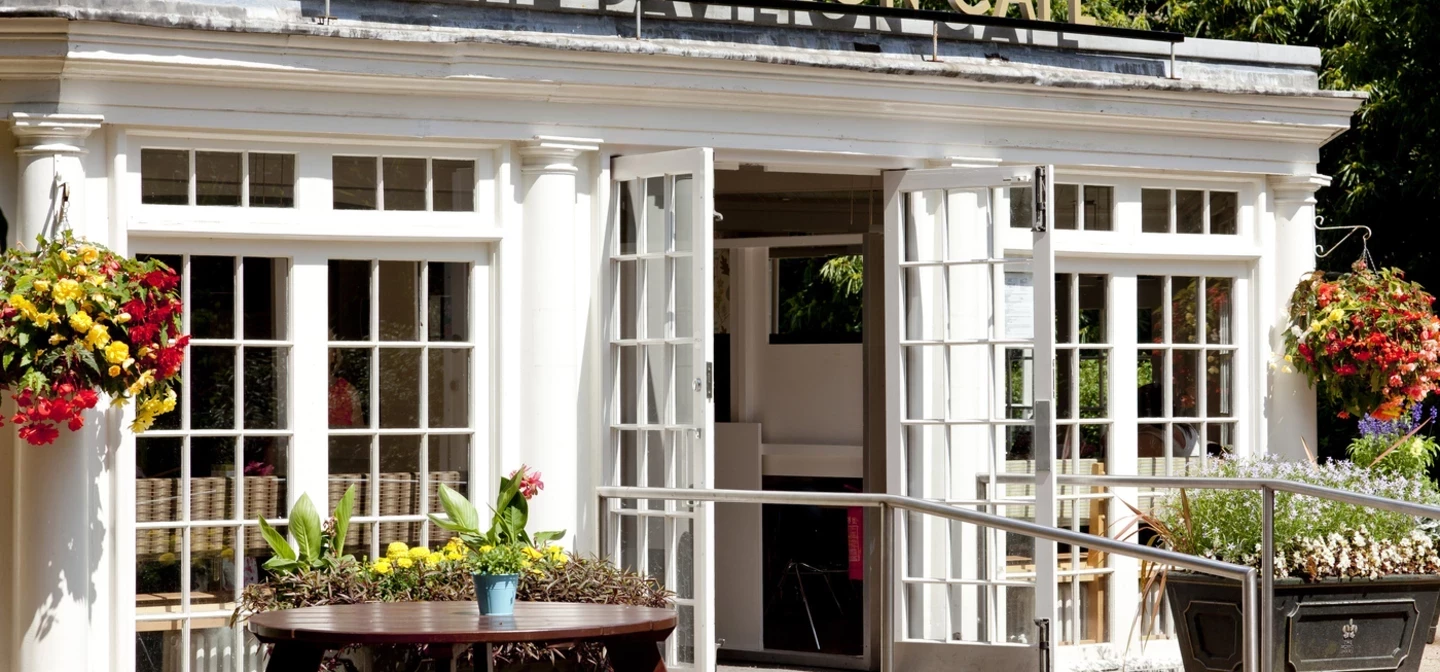
If you want a break before or after the Observatory, The Pavilion Café is close by at the top of the hill in Greenwich Park.
Featured in this story
The Pavilion Café
Cafe & Coffee · Greenwich
Situated in a historic 1906 octagonal building near the Royal Observatory, this café in Greenwich Park serves breakfast, lunch, and cream tea with seasonal outdoor dining options.
The café occupies a distinctive octagonal building dating from 1906 and serves breakfast, lunch, cakes and other refreshments, with seasonal outdoor space. Its business profile also notes step-free access and an accessible toilet. Opening times can vary, so check before relying on it for a particular meal or late-afternoon stop.
There are other cafés and places to eat throughout Greenwich Park and down towards central Greenwich, so a visit does not need to revolve around one option. If you are planning a full day, it can work well to visit the Observatory first and then descend towards the museums, market and riverside.
What else can you combine it with?
The Royal Observatory sits within one of the richest clusters of attractions in London. At the bottom of the hill are the Queen’s House and National Maritime Museum, with the Old Royal Naval College, Greenwich Market, Cutty Sark and the riverside only a short walk beyond.
That makes the Observatory easy to build into different kinds of day. Families can combine the science and Meridian experience with the park and playground. History-focused visitors can continue through Maritime Greenwich. If the weather is good, you can spend much of the day outside and use the museums as individual stops rather than trying to see everything at once.
The viewpoint outside the Observatory is free, so even if you are not buying a ticket, the top of the hill is still worth including in a walk through Greenwich Park.
Why the Royal Observatory still matters
What makes Royal Observatory Greenwich compelling is the way a very local place connects to a global idea. Greenwich’s name appears on clocks, maps and time zones around the world, yet the story begins on this hill in a Royal Park.
The Observatory brings together astronomy, navigation, architecture, maritime history and the practical human need to know exactly where — and when — we are. Add the park, the skyline and the rest of Maritime Greenwich around it, and it becomes much more than a single attraction.
For a first visit to Greenwich, it is one of the places that helps everything else make sense.




Useful answers


