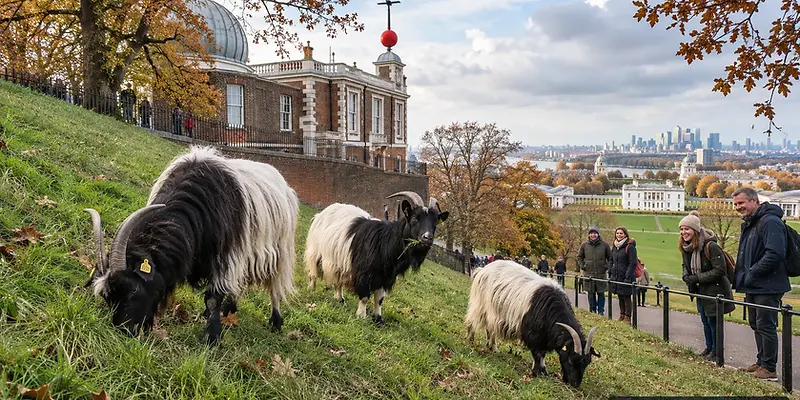
Greenwich Park Has New Gardeners — and They're Goats!
Rare Bagot goats are grazing beneath Greenwich's Royal Observatory from 23–27 November. Discover why they're here, how conservation grazing works and where to see them.
From a distance, they could be mistaken for particularly shaggy visitors enjoying the view. But the newest arrivals beneath Greenwich’s Royal Observatory have a job to do.
Rare Bagot goats have arrived in Greenwich Park for a five-day conservation-grazing trial, helping The Royal Parks explore a more natural way to look after the steep bank below one of London’s most recognisable landmarks.
The animals are here Monday 23 to Friday 27 November 2026, and visitors can see them between 11am and 3.30pm. It’s a wonderfully unusual sight — and the story behind it is about much more than goats cutting the grass.
Why are goats grazing in Greenwich Park?
The Royal Parks charity is working with Mudchute Park and Farm and the Rare Breeds Survival Trust to test *conservation grazing*: using animals’ natural browsing behaviour to manage vegetation and improve the conditions for a greater variety of plants and wildlife.
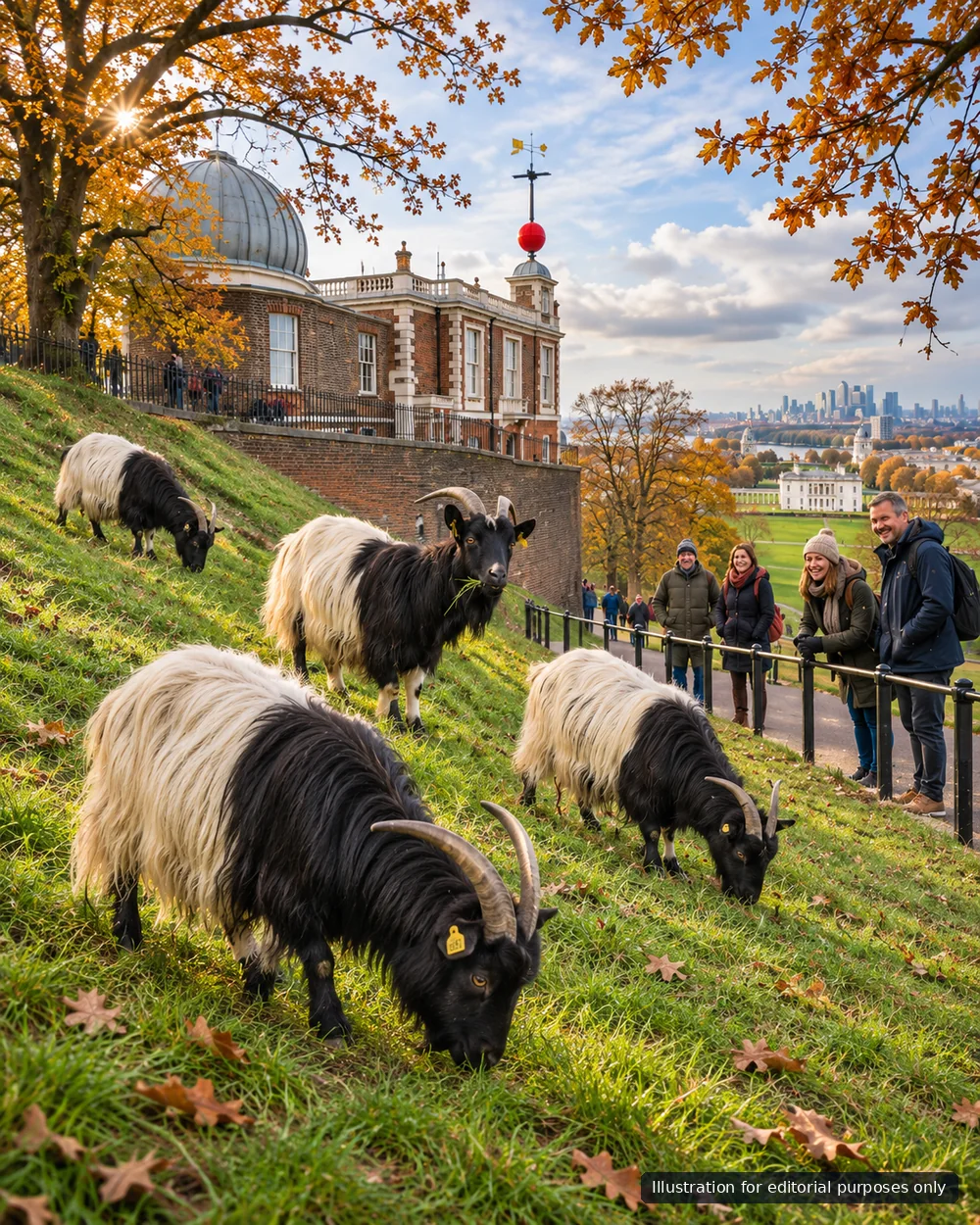
Their temporary workplace is Castle Hill Bank, immediately below the historic Royal Observatory. It is a steep, awkward-to-maintain slope in the heart of Greenwich Park, where conventional machinery and even volunteer work can be difficult.
Goats don't graze quite like lawnmowers. As natural browsers, they enjoy tougher woody growth, leaves and thorny stems. By keeping vigorous vegetation in check, they may allow a richer mix of plants to flourish. In turn, the park hopes a more varied habitat could eventually support more invertebrates, birds and small mammals.
This is a trial, not a claim that biodiversity has already increased. The point is to explore whether conservation grazing can become another useful tool for the people looking after this extraordinary landscape.
Meet the Bagot goats — a rare British breed
With striking black-and-white coats, long hair and prominent curved horns, Bagot goats are unmistakable.
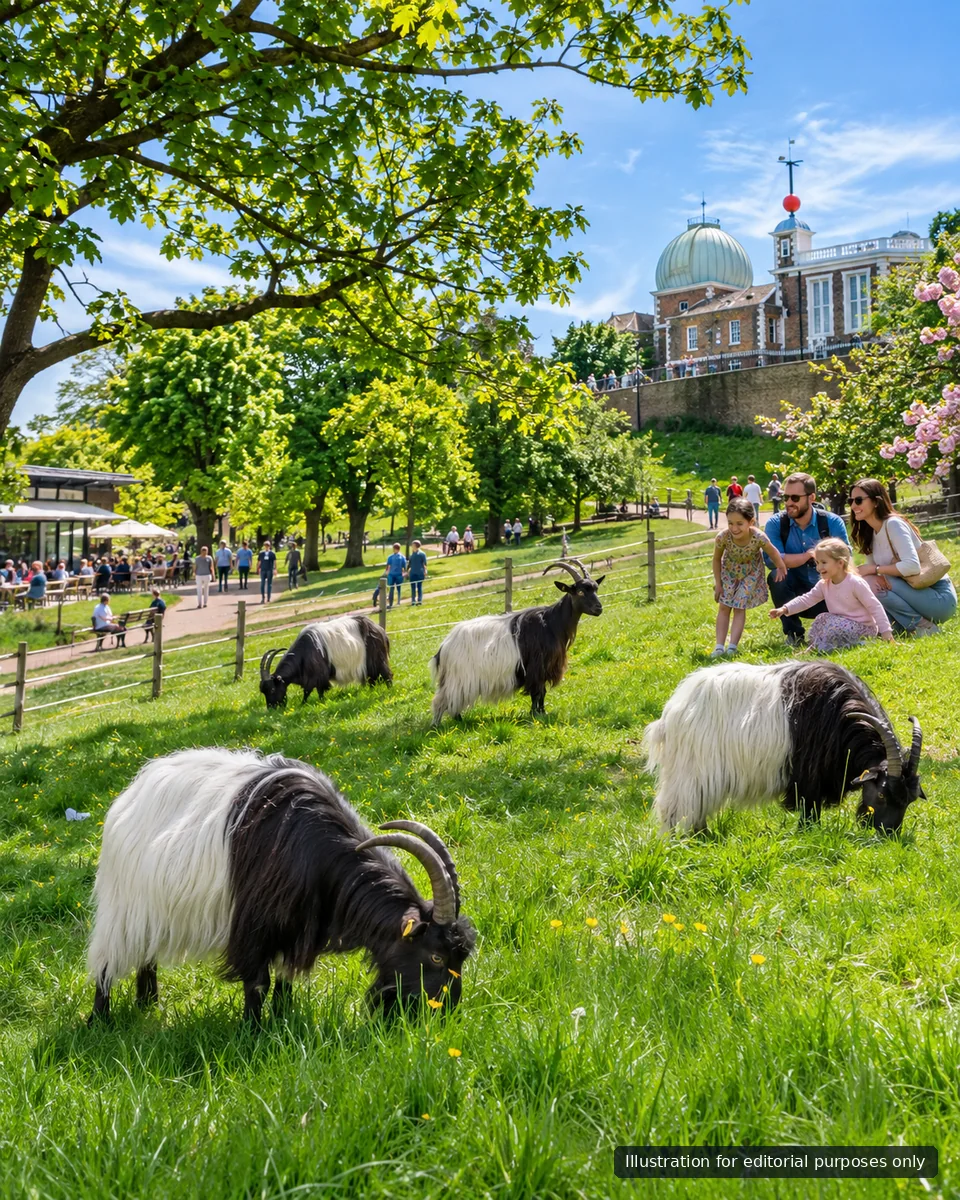
The breed is recognised as Britain's oldest native breed of goat. Hardy and light on their feet, Bagots are well suited to uneven ground, and their taste for scrub makes them particularly helpful on a slope like Castle Hill Bank.
There’s another reason this partnership matters. The project gives a rare native breed a practical role in conservation, helping show why preserving traditional livestock breeds can still be relevant today.
The Rare Breeds Survival Trust is collaborating on the project, alongside the team at Mudchute. This is not a petting zoo: these animals are working in a carefully managed paddock, and their welfare and habitat-management role come first.
Why this particular hillside matters
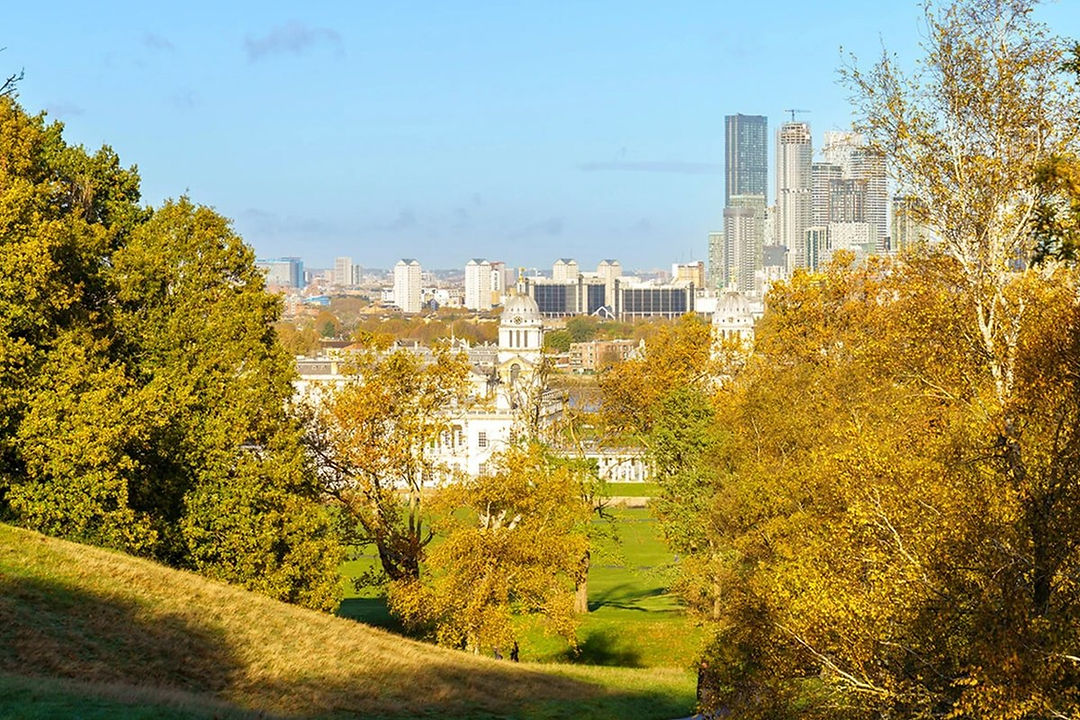
Stand near the Royal Observatory Greenwich and look down across the park towards the Queen's House and the City skyline. The celebrated view is part of what makes the Maritime Greenwich World Heritage Site so special.

But those dramatic slopes require sensitive care. The Royal Parks says the steep terrain and vegetation make maintaining the historic setting especially challenging.
Clare Lanes, Greenwich Park Manager at The Royal Parks, describes the goats as natural grass cutters and says the trial is intended to help protect the landscape more sustainably.
The charity’s wider goal is to care for its eight historic parks in ways that can cope with changing environmental conditions. Conservation grazing fits into that work: a centuries-old technique being tested in a very modern city.
A new chapter after Greenwich Park Revealed
The five-day experiment also follows the major *Greenwich Park Revealed* project. The £12 million restoration, celebrated in 2024, repaired significant elements of the park’s historic landscape, enhanced its ecology and improved visitor and learning spaces.
That work included reviving the Grand Ascent, a sequence of historic grass terraces that had suffered from erosion. The new goat project is separate, but shares the same broader principle: protecting Greenwich Park’s heritage while making more space for nature.
From Mudchute Farm to the Observatory hillside
The grazing partnership brings together two of east and south-east London’s best-known green spaces.
Mudchute Park and Farm, on the Isle of Dogs, is helping care for the animals throughout the visit. Farm Manager Tom Davis will closely supervise the project, with the goats shepherded on and off the site each day.
According to The Royal Parks, their paddock includes fresh water and a lean-to shelter. Visitors will be able to observe the goats from outside the grazing area, while the farm team makes sure the animals are safe and comfortable.
Tom Davis says the collaboration will give this rare breed a worthwhile conservation purpose and could help create more suitable habitat for insects, birds and small mammals over the longer term.
The trial forms part of the Royal Parks charity’s *Help Nature Thrive* work and has been made possible with support from players of Postcode Lottery.
Why conservation grazing can be good news for wildlife
A park may look at its tidiest when every patch of grass is cut to the same length, but nature often benefits from something less uniform.
Different heights and types of vegetation can create different places for insects to feed, shelter and reproduce. Birds and small mammals may then benefit from the greater variety of food and cover.
Goats can help by browsing stems and scrub that would otherwise become dominant. They are particularly useful in places difficult to maintain mechanically.
There are no guarantees from a single five-day visit. The Royal Parks is testing an approach, not announcing a permanent grazing programme. The longer-term question is whether carefully managed animal grazing could provide a more sustainable way to look after particular parts of the park.
When and where can you see the goats?
The Royal Parks has announced the following visitor window:
Enjoying this? Get more in your inbox
Local news, events and stories from Blackheath & Greenwich, delivered to your inbox fortnightly. Quick and simple to sign up, and you can opt out any time.
We'll email you a link to confirm. By signing up you agree to receive our newsletter, and you can opt out any time. See our Privacy Notice.
Please keep your distance from the paddock, do not feed or touch the goats, and keep dogs safely away from the enclosure. Follow any instructions from The Royal Parks or Mudchute staff.
Because this is a working conservation trial rather than a conventional visitor attraction, arrangements may be adjusted for animal welfare or operational reasons. Check The Royal Parks' official announcement before making a special journey.
Make a day of it: coffee, views and a little Greenwich exploring
There is plenty to enjoy around the goats' temporary home, especially if you're visiting with children or showing guests around Greenwich.
Greenwich Park and its remarkable views
Start with Greenwich Park itself. The park's elevated paths, ancient trees and famous panorama make a rewarding outing even in the colder months. The Royal Observatory provides the best-known landmark above the grazing bank; note that its First Light refurbishment affects visitor access, so check current arrangements before planning an Observatory visit.
For children, the Greenwich Park Playground is another option for a longer family outing.
A warm stop at The Pavilion Café
A short walk near the Observatory brings you to **The Pavilion Café**, one of Greenwich Park's most recognisable refreshments stops.
Its octagonal building dates from 1906 and has recently been refurbished. The café serves breakfast, hot lunches, sandwiches, cakes and drinks, with indoor and outdoor seating. The Royal Parks currently lists winter hours of 8am–4pm, subject to changes.
The Pavilion is an ideal place to warm up after seeing the goats — and an example of how our local cafés form part of a great day exploring Greenwich.
Discover the Ignatius Sancho Café
For something a little different, the Ignatius Sancho Café near Vanbrugh Gate and the Learning Centre offers food and refreshments beside the community kitchen garden. It is named in honour of Ignatius Sancho, the Greenwich-linked writer, composer and abolitionist.
Purchases at the park’s cafés and kiosks help contribute to the care of the Royal Parks, according to the charity.
If you’d like more places to explore, browse our Greenwich Local Guide and Kids & Family activities pages.
Could this become a regular feature?
Possibly — but nothing permanent has been announced.
The goats are here for a short conservation trial, and the Royal Parks will be assessing whether this traditional technique is suitable for future habitat management. Whether or not they return, their visit opens an entertaining conversation about rare breeds, biodiversity and the work involved in maintaining one of London’s most-loved historic parks.
Perhaps the most delightful part of the story is that it reminds us how conservation can be both serious and surprisingly joyful.
Sometimes protecting a landscape means planting trees, restoring historic features or introducing new scientific methods. And sometimes it means asking a few goats to lend a hoof.
Have you spotted Greenwich Park’s newest gardeners? We'd love to hear about your visit and see your photographs. Contact Welcome to Blackheath & Greenwich with your experiences.
---
Sources and further information: The Royal Parks — goat conservation trial (23 November 2026) · The Royal Parks — Greenwich Park Revealed · The Royal Parks — Greenwich Park food and drink · Mudchute Park and Farm
*The illustrations accompanying this article are for editorial illustration only and do not depict photographs taken during the conservation trial.*
Enjoyed this? Get more in your inbox
Local news, events and stories, delivered to your inbox fortnightly. Opt out any time.
We'll email you a link to confirm. By signing up you agree to receive our newsletter, and you can opt out any time. See our Privacy Notice.
Places featured in this story
Place to explore
Greenwich Park
Greenwich Park is a historic 74-hectare Royal Park with sweeping London views, formal gardens, ancient landscape traces and the Royal Observatory at its centre. It suits…
Place to explore
Royal Observatory Greenwich
Closed for renovation from 2 November 2026. The historic home of Greenwich Mean Time and the Prime Meridian, set at the top of Greenwich Park with astronomy, navigation…
Useful answers
Frequently asked questions
When can I see the goats in Greenwich Park?
Where are the goats in Greenwich Park?
Do you need tickets to see the Greenwich Park goats?
Why have goats been brought to Greenwich Park?
Can I feed or pet the goats?
EXPLORE GREENWICH
Make a day of it in Greenwich Park
Plan a park visit and discover the cafés, landmarks and local businesses nearby.